
The Evolution of Architecture and Current Development
Muhammad Ilham Ramadhan
9/28/20252 min read
From Historical Roots to Modern Styles
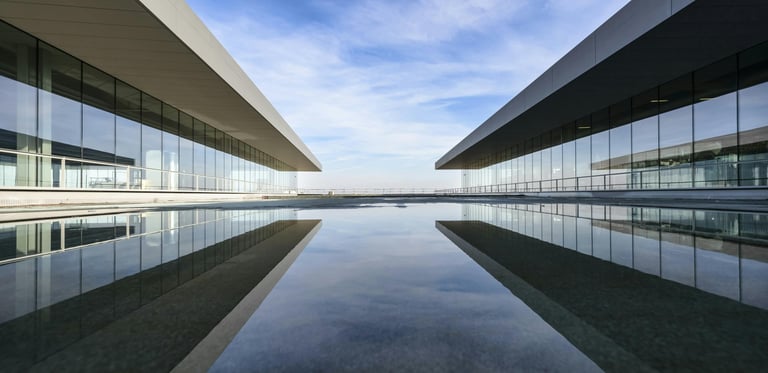
The evolution of architecture from its historical roots to today’s cutting-edge trends sustainability, smart technology, and climate-responsive design.


Architecture has always been more than just the art of building—it reflects culture, technology, and the values of society at every point in history. Over centuries, architectural styles have shifted in response to new materials, social movements, and environmental conditions.
Classical and Vernacular Architecture — rooted in local traditions, materials, and climate-adaptive techniques.
Modernism / International Style — emerged in the early 20th century, emphasizing simplicity, function, and minimal ornamentation.
High-Tech Architecture — developed in the 1970s, highlighting exposed structures and advanced technology.
Postmodern and Contemporary Architecture — reintroduced ornamentation, cultural narratives, and contextual elements.
Tropical Modernism — combining modernist principles with climatic adaptation, especially relevant for tropical regions.
Biomorphic and Zoomorphic Design — inspired by organic forms and nature, shaping futuristic and symbolic buildings.
Current Architectural Trends
In today’s context, architecture must respond to urbanization, climate change, and rising expectations for healthier and more efficient spaces. Some key trends include:
1. Sustainable & Regenerative Architecture
Sustainable architecture now goes beyond energy efficiency to embrace regenerative design—restoring ecosystems while providing functional spaces. Examples include green roofs, vertical gardens, and passive design strategies. Recent innovations such as Eco-Sphere software integrate carbon-cost balancing to support low-carbon urban development.
2. Adaptive Reuse, Modular & Circular Design
Repurposing old buildings (adaptive reuse) reduces construction waste while preserving heritage. Meanwhile, modular and prefabricated systems enable faster, more efficient building delivery. Circular design principles focus on recyclability and minimizing waste, shaping the next generation of construction approaches
3. Flexible and Multifunctional Spaces
With growing urban density, spaces must be designed for adaptability—work, leisure, and family life often coexist in hybrid environments.
4. Climate-Responsive & Resilient Design
Architecture now prioritizes resilience against extreme weather and climate change impacts. Buildings are increasingly designed with climate-sensitive strategies—shading devices, flood resistance, and wind protection.
5. Integration of Technology: AI, Digital Twins & Automation
AI-driven generative design optimizes layouts based on sun orientation, airflow, and energy use.
Digital twins and smart sensors allow real-time monitoring of building performance.
3D printing and automated construction methods are beginning to transform selected structural applications.
The Relevance for Indonesia
As a tropical country facing rapid urbanization and climate challenges, Indonesia stands at the forefront of architectural transformation. Opportunities include:
Tropical modernism with passive cooling and shading.
Local materials & craftsmanship blended with modern innovation.
Vertical housing and adaptive urban planning to meet growing population demands.
Green building policies encouraging net-zero and energy-efficient projects.
At Decons, we deliver integrated Architecture, Engineering, and Construction (AEC) services built on three pillars:
Quality — precision in design and execution.
Efficiency — streamlined processes with smart solutions.
Sustainability — eco-conscious and future-ready design.
Quality — precision in design and execution.
We create spaces that are adaptive to their environment, efficient in performance, and aligned with global sustainability standards. Our collaborative team of architects, engineers, and builders ensures every project moves seamlessly from vision to reality.
ARCHITECTURE | ENGINEERING | CONSTRUCTION
Get In Touch With Us!
Address: Aminta Plaza, 5th Floor (504), TB Simatupang Kav.10, South Jakarta Jakarta – Indonesia 12310.
© 2025. All rights reserved by Decons Karya Sejahtera.


Reach Us on Our Social Network!
Phone: (+62) 812-8423-6563
Email: deconskaryasejahtera@gmail.com